The Ambition Empower team is growing! Welcome Nathalie Tindsjö!

As Ambition Empower continues to grow, it’s now time to expand the team. From now on, Nathalie Tindsjö steps in as Head of Ambition Empower.

One of the best things about developing a service for continuous professional development – Ambition Empower – is that all 20+ Ambition employees contribute in big and small ways. ALL colleagues deserve credit for the service being developed as nicely as it has been since its launch in September 2021.

But when it comes to the hours we’ve spent on developing and delivering the service, it’s primarily Jane Murray, Anders Thid, and myself who have had our focus here.

As Ambition Empower continues to grow, it’s now time to expand the team. From now on, Nathalie Tindsjö steps in as Head of Ambition Empower.

I have worked with Nathalie for many years. Now at Ambition, when we were at different companies, and of course also back when we were colleagues at inUse. She is a force of nature. Her unique combination of competence, commitment, and curiosity means incredibly much for the team and our ability to continue to develop Ambition Empower.

As Ambition Empower gets more and more larger organizations as customers, we also need to develop our work with strategic partnerships. Nathalie joining the team means that Jane will be able to spend even more time helping our customers succeed in reaching their goals and continue to develop, as well as continuing the work with our network for Design, UX, and CX managers.

Learn more about Ambition Empower here.

Journey Management at Polestar

Hi Maria Wilhelmsdotter! You’re a CX Global Insight & Research Manager at Polestar. Can you introduce us to the Customer Insights and Analytics team at Polestar and your role within it?

– Sure! The Customer Insights and Analytics (CI&A) team has been around for four years, and I’ve been part of it for three. Initially while we also were building processes, tools and capabilities, our focus was mostly on individual metrics and data points, we lacked the broader perspective. One part of my role has been to introduce a more qualitative view and to help us understand the full context of our data, moving from isolated insights to a holistic understanding of our customer’s experiences.

How did the focus of your team evolve under your guidance?

– When I joined, I noticed we were very much zoomed into specific details without seeing the bigger picture. We wanted to establish a customer journey perspective and started mapping journeys like test drive or handover, but it was still a bit fragmented. There was a mismatch between our assumptions of what customers were doing and their actual behaviors. Recognizing this helped us first understand ourselves better and then customers behavior, which was crucial for improving our customer insights.

What changes did you implement to improve the process of turning insights into actions?

– A key change was ensuring relevant stakeholders were collaborating to enable action on insights immediately. We learned that having direct access to decision-makers during our insight discussions allowed us to move quickly from understanding to action. This approach was refined in what we later called the Journey Management (JM) role focusing on overseeing the process from insight to implementation.

How has the approach to customer understanding and interaction within the team shifted over time?

– Initially, we were too focused on internal issues and not enough on truly understanding the customer. For example, being curious about reasons behind customers wanting to book test drive, when we were still struggling to facilitate that very process was challenging. We’ve since then moved closer to our customers by understanding the difference between our own fail-points and customers pain-points.

Can you talk about the tools and partnerships that have been instrumental in your team’s journey?

– TheyDo and our partnership with Ambition has been really important. TheyDo provided us with a tool for aligning our insights and managing our customer journeys. Ambition has been invaluable in raising our competence through methods, knowledge, and contextualizing our work. Both have supported our transformation journey, although adapting their use to fit our unique context at Polestar has of course been a learning process.

Looking back, what advice would you give to other organizations aiming to improve their customer insights and analytics?

– I would advise starting small and scaling gradually. It’s crucial to adapt your approach based on learning and evolving needs. For us, the journey involved learning from each step and adjusting our strategies accordingly. Understanding the importance of context, ensuring the right stakeholders are engaged, and being patient with the process are key lessons we’ve learned along the way.

Thank you, Maria! And thanks for a great collaboration! 

“För oss är det viktigt att bygga vår identitet och gemenskap kring vår kompetens”

Usify satsar på effektiv kompetensutveckling för att både stärka kompetens och kultur.

Hej Martin Wiman, ny VD på Usify! Vilken är din mest spännande utmaning just nu?

– Oj, det finns många spännande utmaningar med att vara designkonsult. Just nu jobbar vi mycket med att visa för våra kunder hur tjänstedesign och UX kan användas på strategisk nivå för att förbättra samspelet mellan företagsledning, produktledning och tjänsteutveckling. Genom att lyfta blicken från taktisk nivå och tydligt knyta design till kundens affär är det enklare att skapa större värde.

Spännande! Nyligen bestämde ni er för att ansluta hela bolaget med drygt 15 anställda till Ambition Empower, varför då?

– Vi ville hitta ett effektivt sätt att göra kompetensutveckling till en del av vår vardag och stärka vår designkultur. För oss som designkonsulter är det viktigt att bygga vår identitet och gemenskap kring vår kompetens och det är roligt att lära sig saker tillsammans.

Nu har ni varit igång ett tag, vad tycker du är bäst och mest spännande så här långt?

– Vi har delat in oss i grupper efter vilka spår var och en tycker är mest intressant. Vi har t.ex. ett gäng som fokuserar på Design Leadership med Kim Goodwin, ett spår som också hjälper oss med just det som jag beskrev i början. Ett annat gäng fokuserar på Inclusive Design and Digital Ethics med Per Axbom. Grupperna träffas varannan vecka för att diskutera materialet och de tankar som väckts. Ambition ger oss stödet att hålla igång de samtalen på ett spännande och bra sätt.

– Det bästa med Ambition Empower är den kunskap vi skapar tillsammans i diskussionerna. Empower blir som en plattform att stå på, som en kunskaps- och kulturbyggar-katalysator.

Tack Martin! Fantastiskt kul att ha er med!

Ambition Empower är en tjänst för kontinuerlig kompetensutveckling inom UX, tjänste-, och produktdesign där några av världens främsta experter hjälper dig att utvecklas inom de områden som är viktigast just nu. Tjänsten är optimerad för den som bara kan investera en timma i veckan men ändå vill fortsätta växa.

Kontakta  eller  för mer information.

Product Management: The least-defined job in tech

By: Kim Goodwin. You’ve probably heard about the new Ambition Empower track for product managers that starts in January. One question I’ve been getting is: which kind of product manager is it for? This is a great question because, in my experience, the PM role is probably the most variable job in tech.  

First, there’s the question of who pays for your product. Is it sold directly to consumers, to businesses, or to consumers via businesses? Or maybe your revenue is ad-based, or you have a non-revenue product that’s evaluated based on cost savings, instead. And is it subscription or upgrade-based? The PM’s job changes quite a bit in each of these cases.

In B2C markets, you’re betting on features that will appeal directly to users. You need to be best friends with the marketing team as you both experiment to optimize your conversion funnel and your retention or upgrade numbers. Your integration concerns probably focus on tools for email campaigns and other engagement levers. Getting market feedback on changes is relatively easy; juggling the needs in a potentially vast and diverse market is not. 

B2B product managers — especially those selling to large customers — need to be hand-in-glove with the enterprise sales team to make sure pilot projects and contracts align with the product’s actual capabilities. The biggest accounts expect to drive the roadmap, whether that makes sense for the overall market or not. In less mature organizations, there may be pressure to have development teams act as enterprise integration providers. It can be hard to make space for user-facing features when enterprise infrastructure, security, and compliance concerns take so much time. And when you do get to work on user-facing things, the sales team may be concerned about letting you into those big accounts for research — after all, you might say or do the wrong thing.

If your focus is on users but the real customers are advertisers, there is constant tension between eyeballs-on-ads versus a good experience that makes users want to come back. Or if your model is B2B2C, you have the challenges of both worlds–making a product that appeals to end consumers, while addressing the demands of your biggest distributors.

PMs who manage internal tools, shared platforms, and other non-revenue products may struggle to get resources for their products at all. Measuring ROI can be complicated when cost savings are the focus. Managing internal customers who are your colleagues can, in some ways, be more difficult than handling external expectations. 

Then there’s the maturity of your product and your organization. Managing the creation of something new — in an ill-defined market, with the growing pains of a startup — is very different from optimizing a well-established product, or from trying to innovate in an older company that’s fallen behind the market. Early-stage PMs need the skills to build a team culture, define a product strategy, and find product-market fit. Later-stage PMs need to be great at optimizing the machinery, helping habituated users accept change, and looking ahead to avoid stagnation. 

These and other differences — industries, regulation, organizational culture, seniority, and more — make every PM role unique. That’s why our track will spend time specifically on these issues — both to make sure we’re covering what matters in your current role, and to help prepare you for what might change as you take next steps in your career.

That said, every PM role requires a core set of skills, too, like communication, collaboration, problem definition, and ruthless prioritization. As we address these, we’ll do so with an eye to how your environment affects the nuances of each.

Product management is always a new puzzle — which is what makes it fun, right?

Check out Kim’s new Product Management track, and join Ambition Empower now!

Kim Goodwin is the author of the bestselling book Designing for the Digital Age. For the last 14 years, she has been helping product teams, managers, and leaders succeed. Earlier in her career, Kim was the VP of Design and General Manager at Cooper, a leading design and strategy agency in San Francisco, for 12 years.

Ambition Empower is a subscription service where thought leaders within UX, service design, and product design help you and your team grow. It is optimized for busy organizations, allowing members to spend as little as one hour per week and still stay ahead of the competition. Sign up and join Ambition Empower here.

“Professional development is essential to our organizational growth”

Volvo Group Digital and IT joins the esteemed list of Ambition Empower enterprise customers as 36 of their highly skilled employees join Ambition Empower.

Hi Pernilla Johansson! You’re a VP and Head of UX Design at Volvo Group Digital & IT. What do you do in your everyday work, and what’s your most interesting challenge right now?

– I’ve been with the Volvo Group for just over a year, working to design and establish the UX organization that aligns with the ambitious and transformative agenda of our Digital Community. The initial months were primarily focused on forming a new leadership team, while the latter half centered on building a shared foundation. Looking ahead to the next year, my focus is on enhancing our practice, elevating UX maturity and driving impact through design. I joined the Volvo Group for the change journey and the challenge has proven to be as significant and substantial as anticipated, if not more so.

Sounds like a really interesting challenge! 36 of your co-workers recently joined Ambition Empower. Why?

– Professional development is essential to our organizational growth, and at Volvo Group Digital and IT, we want to be at the forefront of User Experience and Digital Product & Service Development. Ambition Empower – covering everything from AI and Design to Design Leadership, Product Management, Research, and Prototyping with Figma – is a perfect foundation for us to learn and grow from.

– I’ve been a member before and really enjoyed both the tracks and the one-hour-per-week format. Being able to offer Ambition Empower to everyone who works here is great, both for the organization and for the employees.

What goals do you have for your organization regarding Ambition Empower?

– I’m hoping that we can become a learning organization in a true sense, where we can set up structures to, e.g., meet up in regular intervals to share insights and exchange experiences. We want to build an even stronger design culture, continuously improve the way we work to deliver more value to the organization as a whole, and, of course, support individuals on their development journey.

Thanks, Pernilla! We’re so excited to have you with us!

Ambition Empower is a subscription service where thought leaders within UX, service design, and product design help you and your team grow. It is optimized for busy organizations, allowing members to spend as little as one hour per week and still stay ahead of the competition.

Interested in learning more about Ambition Empower? Reach out to or , or check out Ambition Empower here on the Ambition website.

New track! Product Management with Kim Goodwin!

Kim’s Design Leadership track has been a complete success ever since we started Ambition Empower. For the last 14 years, she has been helping product teams, managers, and leaders succeed, so when we went looking for someone to head a new track for Product Managers, we went straight to her. The track is ideal for PMs who wish to enhance their skills and grow within all the diverse challenges of product management.

Kim! We’re so happy you agreed to do a Product Management track with us! What would you say are the most essential characteristics and skills you need to succeed as a Product Manager?

– I think this varies depending on how the PM role is defined in your organization, the life stage of your organization and product, and the scope or seniority of the role.

– Regardless, I think PMs at any level need to understand their users and customers, the business strategy, and the forces that affect their market. They need the leadership skills to get the most out of a team. They need empathy and negotiation skills to juggle a wide range of stakeholders. It takes excellent communication skills to ensure everyone is clear and aligned around the goals and requirements.

– I think, above all, PMs need to take in a huge range of opinions and data, know how to filter those for quality and relevance, and involve the right people to get the best decisions made. Note that I didn’t say “make the best decisions” because, in my view, the best PMs approach many decisions in a collaborative way.

That’s quite a tall order. What are great ways to learn those skills?

– In my experience, the best PMs start with curiosity, a growth mindset, and an awareness that everyone else on the team is more expert in something than they are. They read voraciously, seek feedback frequently, and experiment not just with the product but with the way they work. They take courses not just in product management but in adjacent fields. And they learn a ton on the job, ideally with good mentoring—things like good judgment and relationship skills take years of conscious practice.

I’ve talked to many PM’s over the years, and sometimes I’ve thought that they’ve taken on an impossible task. What would you say are the most significant challenges among PMs, and what are effective ways of dealing with them?

– The challenges definitely vary based on the role. In startups, PMs often have the impossible task of defining and building a product when the business strategy is still up in the air—maybe we’re going after a different market this week than we thought we were aimed at last week. When the product has a big enterprise customer base, PMs can struggle to make any change at all without upsetting people. But there are universal challenges too. Stakeholder management is always one of them.

– Lots of PMs want to empower their teams but have to take feature wish lists from their execs. Being asked to do too much with too little. Or being caught between development teams with a strong push to be agile and senior managers who want two-year roadmaps. I see some early to mid-career PMs struggle with where their role ends and where the architect’s or designer’s or researcher’s role begins.

– Senior PMs often try to figure out how to transition from doing everything themselves to delegating among a larger PM team. As for effective ways of dealing with them…well, that would be a long answer! We’ll dig into all those things in the track over the next year.

Finally, what are you most looking forward to when you start the track in January?

– It’s been pretty clear in the design leadership track that it’s not just me teaching people “right” answers. There’s a ton of wisdom in the group, and it’s great to hear people share their own experiences and strategies. Also, this is a new track—I think we’ve got a solid outline for what to cover, but I’m very much looking forward to seeing where people want to go and adapting as we need to.

Thanks Kim! We’re really looking forward to doing this together with you!

Checkout Kim’s new Product Management track, and join Ambition Empower now!

Kim Goodwin is the author of the bestselling book Designing for the Digital Age. For the last 14 years, she has been helping product teams, managers, and leaders succeed. Earlier in her career, Kim was the VP of Design and General Manager at Cooper, a leading design and strategy agency in San Francisco, for 12 years.

Ambition Empower is a subscription service where thought leaders within UX, service design, and product design help you and your team grow. It is optimized for busy organizations, allowing members to spend as little as one hour per week and still stay ahead of the competition. Sign up and join Ambition Empower here.

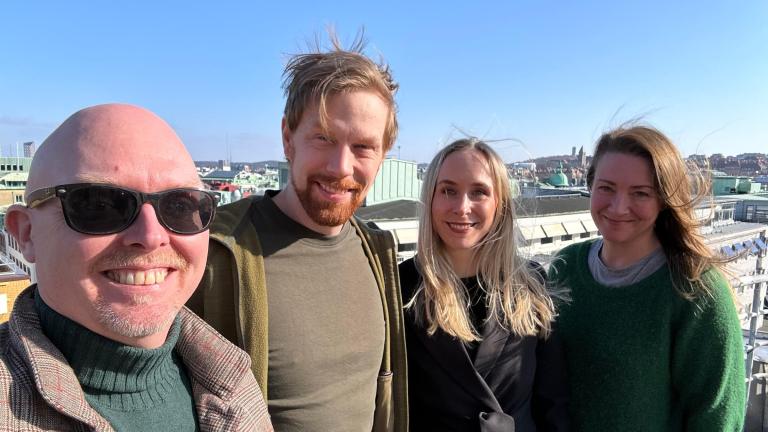
Here’s to the first 1000 days!

February 1st, 2021, feels like yesterday… and like 10 years ago. Time is funny that way. We’ve gotten so much done, and at the same time, we’ve only just started.

Since Jane and I kicked this off, Ambition has quickly become the best place I’ve ever worked. 20+ amazing colleagues, 400+ Ambition Empower members, and the best clients and partners one could ever dream of.

My business card says CEO, and one of the perks is constantly being credited for other people’s work. The truth – of course – is that I have little to do with most of our successes (the fuckups, on the other hand… buy me a beer, and I’ll tell you all about them). The real magic happens when our clients meet our consultants, and when our members meet each other and our track leaders.

So. I’m as proud as a peacock, but why do I think Ambition is the best place I’ve ever worked?

Above all. We get shit done. It doesn’t matter if we’re talking about client or internal work. Last week, one of our biggest clients gave raving reviews to our team for their ability to not just suggest great solutions, but also implement them. Earlier this week, we published a cheat sheet for UX researchers who want to explore how generative AI can make them faster and smarter. On Monday, a whole new track starts at Ambition Empower. And the week after that there’s something even more exciting that I hope that I’ll be able to tell you about.

I’m just so impressed with my colleagues. I’ve never been anywhere where we’ve managed to keep up this pace, and I love it.

Thank YOU for supporting us these first 1000 days! It really means a lot! ❤️🙏

PS. And Jane, I still love our first photo session with Martin Lindeborg. This is one of my favorite photos. The spirit. The mischief. 💯 DS.

Are your Figma files a mess? How much time can you save by just keeping your Figma files in order?

Hi Georgiy Chernyavsky! The all-new UI design and Prototyping with Figma track starts at Ambition Empower next week, and we have some questions for you.

First, how much time do you estimate you save each week just by keeping your Figma files in order?

– Keeping the files tidy and standardized helps me, and the team save between one and four hours each week. Mostly, time is saved on onboarding and navigating design files during collaboration. This applies to designers, but also engineers, and other team roles. Simply put, the more collaboration the more time you save.

It seemed like Figma came out of nowhere and quickly became a world standard. Why would you say that is?

– Going cloud was the primary differentiator. As if someone looked at cloud document services (Google, Office 365) and went, “Huh, that’s much better than sending copies of document files. I sure wish there was something similar for design.” Of course, Figma has tons of other handy features. However, in its early days, it won designers’ hearts by providing effortless collaboration and sharing.

In your experience, what are most people struggling with regarding Figma, and why?

– The biggest struggle is keeping up to date with Figma’s new features. This does not only mean knowing about them, or how to use them, but mainly how to implement them in one’s daily work. Whenever Figma releases something big and shiny, this can also require a lot of work. Designers who work on big products or design systems would probably share my sentiments. Implementing variables in a UI library in Figma can become quite a project in itself, just like switching to variants was only some time ago. That’s where dedicating some time to learning about those demanding features helps a lot to reduce confusion and to create a solid plan on how to implement any new feature.

Figma has improved when it comes to collaboration between designers and developers. What would you say is the most helpful in this aspect?

– Figma has been great for collaboration with engineers since the very beginning. But recently, it became even better by introducing Dev Mode, which we will cover in the track. However, despite how well any tool is designed for collaboration, communication with your colleagues is usually the key. Spending time with engineers, ideating, and reviewing the details of designs helps me and my team stay aligned and keep collaboration smooth.

Thanks, Georgiy! Looking forward to your new track!

Ambition Empower is a subscription service where thought leaders within UX, service design, and product design help you and your team grow. It is optimized for busy organizations, allowing members to spend as little as one hour per week and still stay ahead of the competition. If you’re not already one of the 400+ members – join now!

Interested in AI and Design? Listen to the interview with Ambition’s own Johan Salo, as he’s visiting the PinMeTo podcast with Bernardo Candeias!

Johan has been in the digital design industry for more than 15 years. From interactive installations to cutting-edge AI projects, his journey is as intriguing as instructive.

Highlights from the episode:

  1. AI Origins & Evolution: A fresh look at AI’s history and current impact.
  2. AI & Design: How AI tools aid designers in creative processes.
  3. Ethical AI: An exploration of initiatives to make AI more transparent.
  4. Surviving the AI Wave: Practical advice for creatives to utilize AI.

Watch: https://www.youtube.com/watch?v=rNCk5OStYc8

Georgiy Chernyavsky

The Figma Express: Staying on top of your tools, is it worth it?

We asked Georgiy Chernyavsky, the lead for the UI Design and Prototyping with Figma track at Ambition Empower, to reflect on the rapid evolution of design tools. Here, he’s sharing his insights on the significance of staying updated in this fast-paced industry.

Times change, and tools for designers’ craft change with them. New pieces of software emerge, and designers adapt, learn new things, and change their workflows (hopefully for the better). Sometimes, it becomes difficult to keep up with the pace. Then why should designers bother? Would it not make more sense to develop generic, tool-agnostic workflows and standards that will make switching between tools and adopting new software capabilities easy? Well, there is a compelling reason for us designers to always stay on top of all things tooling: efficiency.

A decade ago, knowing how to use a particular piece of design software well was considered a great competitive benefit for a design practitioner. Today, I’d say it is not only expected for designers to know design tools (almost) perfectly but also adopt new features and new tools in general as they are released. And those new features, at times, can be life-changing. 

Think of the latest 2023 Figma big release. Variables, smart prototyping, Developer Mode. All those things seriously questioned how we were previously used to designing with Figma. Then, should we disrupt our existing workflows and use the new techniques? Well, yes, because they make us achieve the same results but faster (or achieve more in the same amount of time, depending on which measurement you like more). 

New design tool capabilities generally make us more efficient. For example, a tool like Microsoft PowerPoint can produce UI designs of as high quality as Figma. However, constructing a UI design for a web app page in PowerPoint would take an incredibly long time. On top of that, it would take even greater effort to communicate those PowerPoint designs to colleagues. 

Away from slightly comic comparisons to more realistic. Think of how different prototyping with Figma became with the introduction of the Smart Animate feature. Suddenly, design prototypes became more realistic and better fit for usability testing and animation specifications. 

The usability testing part here refers to the increased quality of the designs – better prototypes are more immersive and realistic for the research participants and can bring more realistic results. As for animation specification – being able to demo precisely how transitions and micro-interactions should work helped save an enormous amount of time on communication between designers and engineers. 

My point is that with each new time-saving Figma feature and technique we learn, we become quicker and nimbler in our design iterations. 

As for the universal workflows and standards I briefly mentioned above, those are also important. Such things are, e.g., design file lifecycle, design team file space structure, and standardized design file content – all of these help designers stay tool-agnostic and make it easier to move to other tools. On top of that, these standards help others around you – navigating, onboarding, and collaborating.

So, how do you stay on top of things that are constantly evolving? I spend at least a few hours each week looking out for design tooling and methodology news. At Mastercard, besides product and UI design, I am focused on bringing in the best practices around the design process and tooling. A larger part of this focus happens to be on Figma – I help define standards, collaboration flows, and best practices so that we are successful and efficient in our collaboration.

I’d encourage any design practitioner to join me in the UI Design and Prototyping track at Ambition Empower, both to stay on top of their tools, and to become an expert who helps and educates others. This will help you and your colleagues and improve your collaboration greatly. We all know a chain is only as strong as its weakest link.